為什麼選擇 OpenText
為什麼選擇 OpenText
概述為什麼選擇 OpenText
OpenText 擁有數十年的專業知識,可幫助您釋放資料、連結人員和流程,並以信任推動 AI
管理和連結資料
在您的企業中無縫統一資料,消除孤島、改善協作並降低風險
具備 AI 的資訊
做好 AI 準備,並將您的資料轉化為結構化、可存取且優化的資訊
內建的安全性與合規性
滿足法規和合規要求,並讓資訊在整個生命週期中受到保護
AI 領導力
概述Aviator AI
以全新的方式查看資訊
OpenText™ Aviator™
AI 了解您的企業、您的資料與您的目標
OpenText™ Content Aviator™
利用 AI 內容管理和智能 AI 內容助手提升工作效率
OpenText™ DevOps Aviator™
加快應用程式的交付、開發和自動化軟體測試
OpenText™ Experience Aviator™
提升客戶溝通與體驗,促進客戶成功
OpenText™ Service Management Aviator™
賦能使用者、服務代理和 IT 人員,讓他們找到所需的答案
OpenText™ Trading Grid™ Aviator™
解鎖貫穿整個供應鏈的 AI 驅動知識、洞察力與引導式行動
Aviator AI
概述Aviator AI
以全新的方式查看資訊
OpenText™ Aviator™
AI 了解您的企業、您的資料與您的目標
OpenText™ Content Aviator™
利用 AI 內容管理和智能 AI 內容助手提升工作效率
OpenText™ DevOps Aviator™
加快應用程式的交付、開發和自動化軟體測試
OpenText™ Experience Aviator™
提升客戶溝通與體驗,促進客戶成功
OpenText™ Service Management Aviator™
賦能使用者、服務代理和 IT 人員,讓他們找到所需的答案
OpenText™ Trading Grid™ Aviator™
解鎖貫穿整個供應鏈的 AI 驅動知識、洞察力與引導式行動
商業網路
概述Business Network
只需連結一次,即可透過安全的 B2B 整合平台觸及任何目標
內容
概述Content
以具備 AI 的內容管理解決方案重新構想知識
DevOps
概述DevOps
利用 AI 驅動的 DevOps 自動化、測試和品質,更快速交付更優質的軟體
Experience and Fax
概述Experience and Fax
以難忘的客戶體驗重新構思對話
可觀察性與服務管理
概述Observability and Service Management
獲得所需的清晰度,以降低 IT 營運的成本和複雜性
API
概述APIs
Extend the value of your OpenText solutions by building integrations, automation and custom experiences
OpenText™ API Services
使用 OpenText Cloud API 按照您的方式構建,創建支持自訂應用程式和工作流程的即時資訊流
可信資料與 AI
概述可信資料與 AI
安全資訊管理與可信賴的 AI 相遇
OpenText™ Aviator™ Studio
一個可以使用資料語言建置、部署和迭代代理程式的地方
OpenText™ Discovery
一套用於幫助擷取資料和自動添加元資料標記的工具,以推動 AI 發展
OpenText™ Data Compliance
一套服務和 API,使治理變得主動且持久
OpenText™ Aviator™ AI Services
專業服務專家協助您踏上 AI 旅程
人工智能
概述Aviator AI
以全新的方式查看資訊
OpenText™ Aviator™
AI 了解您的企業、您的資料與您的目標
OpenText™ Content Aviator™
利用 AI 內容管理和智能 AI 內容助手提升工作效率
OpenText™ DevOps Aviator™
加快應用程式的交付、開發和自動化軟體測試
OpenText™ Experience Aviator™
提升客戶溝通與體驗,促進客戶成功
OpenText™ Service Management Aviator™
賦能使用者、服務代理和 IT 人員,讓他們找到所需的答案
OpenText™ Trading Grid™ Aviator™
解鎖貫穿整個供應鏈的 AI 驅動知識、洞察力與引導式行動




 Vodafone Intelligent Solutions (VOIS)
Leveraging Operations Bridge and AIOps to deliver new services fast and create enhanced observability
About Vodafone Intelligent Solutions (VOIS)

-
Employees:31,000+
-
Global locations:8
-
Value delivered:€1 billion+
Summary
Challenges
- Assigning priority and managing three million IT events every month.
- Fragmented IT operating model with siloed data.
- Difficulty predicting incidents' business impact due to lac of visibility.
Solution
- Leveraged AIOps to provide automation and remove duplication.
- Fixed problems faster with generative AI support.
- Created real-time insights with a data lake.
Results
 Deployed application fixes in minutes
 Reduced mean time to repair P1 issues by 20%
 Improved collaboration and enhanced observability
Challenges
- Assigning priority and managing three million IT events every month
- Fragmented IT operating model with siloed data management
- Difficulty in predicting business impact of an incident through lack of end-to-end visibility
To maintain its leadership position, Vodafone needs to deliver new services to market fast and have full control over its operating costs. With a massive global IT infrastructure, the operating model was fragmented. Local Vodafone markets used different technologies to manage their IT operations, and application teams leveraged different data sets which resulted in different views, even if the same application was deployed in different markets. Overall, teams acted in a siloed manner, with processes requiring too many hand-offs.
Vodafone Intelligent Solutions’ Architect Lead, Mohammed Shata, recalled a time where different tools and consoles were used for system monitoring, “Alarms would go off to indicate an outage, and the team would try to understand whether it was the firewall, a database, or a key application while running between different consoles. It was impossible to predict the potential business impact of an incident as there was no end-to-end visibility into any of our systems.”
This fragmented monitoring model meant that IT could not support the business as effectively as it wanted to. “There was no transparency into how IT provides services, and hence the business had no insight into what value IT provided,” said Shata. “Every month Vodafone systems generate three million events globally which creates a lot of noise. We wanted to introduce a single consolidated layer for IT operations management so that all events occurring in our environment are centrally managed. This required a unified and standardized operating model where all procedures are clear.”
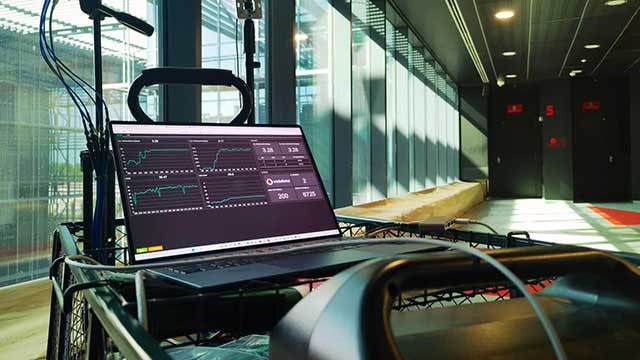
[OpenText™] Operations Bridge is an open solution that allows us to integrate all relevant data sources for end-to-end AIOps observability. This helped to reduce our number of IT incidents and identify and fix critical issues earlier.
Solution
Operations Bridge delivers clear IT observability. This removes the noise from three million monthly events and focuses efforts on root cause analysis. Leveraging generative AI is expected to solve 50 percent of regularly encountered correlation issues.
Products deployed
-
OpenText™ Operations Bridge
Centralized IT event management solution for streamlined operations, real-time insights, and end-to-end observability
Leveraging AIOps provides automation and removes duplicate events
Vodafone’s aim was to create clear IT observability and the team understood how moving towards an AIOps model could support this. Observability is different from traditional monitoring as it not only gathers data but also analyzes that data to provide actionable insights. Those extra steps provide a more comprehensive understanding of system and application behavior and help to identify issues that would otherwise be difficult to detect. Operations Bridge automates discovery, monitoring, and remediation, while fast-tracking a move to full-stack AIOps. It is designed to distinguish the signal from the noise, and focuses IT operations on root cause, rather than fighting symptoms.
With Operations Bridge as the global IT events management solution, domain managers across four continents could work from the same simplified data view at a global level. Shata commented, “Our monitoring takes place on a three-tier architecture where a central Operations Bridge console manages events received from different domains. By leveraging AIOps, we have automated flows for issue resolutions and tickets are triggered automatically when required. We not only detect incidents but correlate the data that drives them by integrating Operations Bridge with more than 15 different third-party tools. This way we remove duplicate events, and auto-close related events by matching event patterns. We consolidate everything into a unified perspective and move quickly through diagnosis and repair. Following the Operations Bridge implementation we noticed a welcome 70 percent alarm reduction, but we knew we could achieve much more.”
Automating correlation with generative AI leads to faster problem fixes
Moving from traditional monitoring to AIOps required a data-centric approach with an event-driven platform. The team wanted to introduce AI to enhance its operations team. By collecting and enriching data from a wide range of sources using Operations Bridge data connectors, many incidents were resolved through automation. OpenText™ SiteScope™, an Operations Bridge component, was leveraged for agentless and remote application monitoring. By proactively monitoring mission-critical applications, the team can now identify and rectify problems before they cause user issues.
Generative AI leads the way to even more innovation, as Shata commented, “We use generative AI to generate new workflows based on our experience of previous incidents. By enriching our alarms and incidents with more context, generative AI can help pass more information to the operations teams so that they can fix the problem faster. For us, Operations Bridge is all about correlation and identifying root cause. We recently moved from manual correlation, the quality of which would be dependent on the level of expertise of the assigned agent, to automated correlation leveraging a machine learning model based on previous events, minimizing human interaction. We anticipate that this will solve at least 50 percent of the correlation issues we regularly encountered.
Creating real-time insights with OpenText™ OPTIC Data Lake
The team applied AI-driven analytics to the monitoring capability. Building on top of the monitoring data and using data log sources, Vodafone created analytics forecasts and baselines. Business Value Dashboards (BVDs) gave real-time insights into IT and business status, and a bi-directional integration between Operations Bridge and Splunk was used for log management and operation analytics.
All data sources leveraged for event correlation are captured in the OPTIC Data Lake, a containerized common repository for data collection and storage enabling real-time streaming data ingestion and processing. OPTIC reporting consolidates highly scalable, real-time performance collection, analysis, and graphing for hundreds of metrics and consumes data from the OPTIC Data Lake. This supports Vodafone’s need to have a clear understanding of how its own IT Key Performance Indicators (KPIs) impact business revenue.

By leveraging AIOps, we have automated flows for issue resolutions and tickets are triggered automatically when required. We not only detect incidents but correlate the data that drives them by integrating Operations Bridge with more than 15 different third-party tools.
Results
Monitoring as Code introduced a shift left so issues are identified and fixed early. By reducing noise and consolidating a variety of data sources for correlation, Operations Bridge simplifies complexity and leverages OPTIC for end-to-end observability.
Improved delivery of application fixes from days to minutes
Introducing Monitoring as Code (MaC) represented a real shift left in application development from a business perspective. MaC includes collection, diagnosis, alerting, processing, and remediation (self-healing), all defined as code. It provides the opportunity to investigate root cause at the point of failure. Instead of manually creating code packages, generative AI can create these automatically, leveraging the latest industry standards. With monitoring deployed alongside the application development via a single, unified pipeline, any issues are identified and fixed early with dynamically configured events delivered to Operations Bridge via API. This reduces Vodafone’s delivery of application fixes from a few days to mere minutes. The expectation is that self-healing capabilities will increase by 30 percent with the introduction of MaC.
Reduced mean time to repair P1 issues by 20%
Deploying Operations Bridge significantly reduced the noise level with AI-driven event correlation in a consolidated environment. Shata said, “Our goal is to reduce priority 1 (P1) issues and the manual labor involved in solving them. By providing a generic data collection approach, Operations Bridge massively simplifies the complexity. Our OPTIC Data Lake is in full operation, applying advanced operational analytics and machine learning algorithms to enhance our operations even further. Having end-to-end observability already reduced our mean time to repair P1 issues by close to 20 percent. Our aim over the next couple of years is to reduce our issue detection time by 50 percent which will positively impact our customer satisfaction.”
Improved team collaboration and enhanced end-to-end visibility
Automatic incident creation and enhanced self-service actions are designed to reduce manual labor for service agents and to free up time to work on application development and service enhancements. Root cause analysis, which could take hours, is now managed automatically in minutes.
Shata concluded, “In collaboration with OpenText we created a single, consolidated layer for IT operations which forms the basis of our application development and management. Operations Bridge is an open solution that allows us to integrate all relevant data sources for end-to-end AIOps observability. This helped to reduce our number of IT incidents and identify and fix critical issues earlier, while the Operations Bridge central event management console gave us a simplified central global view. This improved team collaboration and created visibility in the end-to-end application lifecycle.”
Share your story
Learn more



