為什麼選擇 OpenText
為什麼選擇 OpenText
概述為什麼選擇 OpenText
OpenText 擁有數十年的專業知識,可幫助您釋放資料、連結人員和流程,並以信任推動 AI
管理和連結資料
在您的企業中無縫統一資料,消除孤島、改善協作並降低風險
具備 AI 的資訊
做好 AI 準備,並將您的資料轉化為結構化、可存取且優化的資訊
內建的安全性與合規性
滿足法規和合規要求,並讓資訊在整個生命週期中受到保護
AI 領導力
概述Aviator AI
以全新的方式查看資訊
OpenText™ Aviator™
AI 了解您的企業、您的資料與您的目標
OpenText™ Content Aviator™
利用 AI 內容管理和智能 AI 內容助手提升工作效率
OpenText™ DevOps Aviator™
加快應用程式的交付、開發和自動化軟體測試
OpenText™ Experience Aviator™
提升客戶溝通與體驗,促進客戶成功
OpenText™ Service Management Aviator™
賦能使用者、服務代理和 IT 人員,讓他們找到所需的答案
OpenText™ Trading Grid™ Aviator™
解鎖貫穿整個供應鏈的 AI 驅動知識、洞察力與引導式行動
Aviator AI
概述Aviator AI
以全新的方式查看資訊
OpenText™ Aviator™
AI 了解您的企業、您的資料與您的目標
OpenText™ Content Aviator™
利用 AI 內容管理和智能 AI 內容助手提升工作效率
OpenText™ DevOps Aviator™
加快應用程式的交付、開發和自動化軟體測試
OpenText™ Experience Aviator™
提升客戶溝通與體驗,促進客戶成功
OpenText™ Service Management Aviator™
賦能使用者、服務代理和 IT 人員,讓他們找到所需的答案
OpenText™ Trading Grid™ Aviator™
解鎖貫穿整個供應鏈的 AI 驅動知識、洞察力與引導式行動
商業網路
概述Business Network
只需連結一次,即可透過安全的 B2B 整合平台觸及任何目標
內容
概述Content
以具備 AI 的內容管理解決方案重新構想知識
DevOps
概述DevOps
利用 AI 驅動的 DevOps 自動化、測試和品質,更快速交付更優質的軟體
Experience and Fax
概述Experience and Fax
以難忘的客戶體驗重新構思對話
可觀察性與服務管理
概述Observability and Service Management
獲得所需的清晰度,以降低 IT 營運的成本和複雜性
API
概述APIs
Extend the value of your OpenText solutions by building integrations, automation and custom experiences
OpenText™ API Services
使用 OpenText Cloud API 按照您的方式構建,創建支持自訂應用程式和工作流程的即時資訊流
可信資料與 AI
概述可信資料與 AI
安全資訊管理與可信賴的 AI 相遇
OpenText™ Aviator™ Studio
一個可以使用資料語言建置、部署和迭代代理程式的地方
OpenText™ Discovery
一套用於幫助擷取資料和自動添加元資料標記的工具,以推動 AI 發展
OpenText™ Data Compliance
一套服務和 API,使治理變得主動且持久
OpenText™ Aviator™ AI Services
專業服務專家協助您踏上 AI 旅程
人工智能
概述Aviator AI
以全新的方式查看資訊
OpenText™ Aviator™
AI 了解您的企業、您的資料與您的目標
OpenText™ Content Aviator™
利用 AI 內容管理和智能 AI 內容助手提升工作效率
OpenText™ DevOps Aviator™
加快應用程式的交付、開發和自動化軟體測試
OpenText™ Experience Aviator™
提升客戶溝通與體驗,促進客戶成功
OpenText™ Service Management Aviator™
賦能使用者、服務代理和 IT 人員,讓他們找到所需的答案
OpenText™ Trading Grid™ Aviator™
解鎖貫穿整個供應鏈的 AI 驅動知識、洞察力與引導式行動






 Citizens Energy Group
Saves time and effort, and keeps technical staff focused on strategic objectives by enabling business users to test mission-critical software
About Citizens Energy Group
-
Population served:900,000
-
Founded:1887
Summary
Challenges
- Manually smoke testing new releases of critical applications took around 20 hours.
- Software testing was stealing time and focus from strategic projects.
Solution
- Working with OpenText and iLAB to deploy OpenText™ Functional Testing (UFT One).
- Automating and streamlining existing manual tests.
Results
 92.5% reduced time to execute testing
 Empowered business experts to accomplish tech goals
 75% reduced time required to create test scripts
Challenges
- Manually testing software was taking too long and stealing focus
- Software testing represented an inefficient use of budget and resources
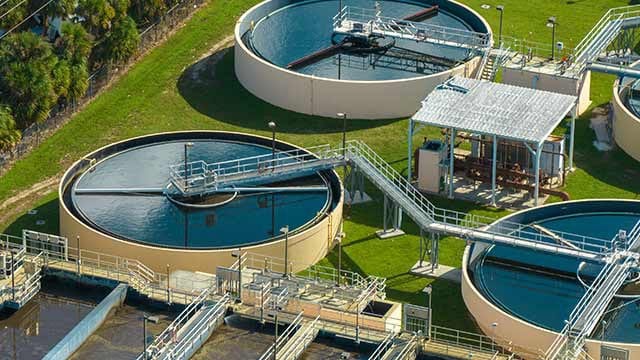
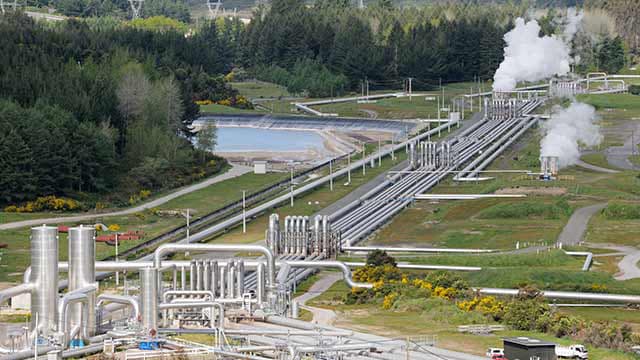
To minimize the risk of wasteful, costly, and potentially dangerous leaks of natural gas, Citizens rigorously inspects and monitors its extensive network of pipelines and valves. In addition to assuring the safe and reliable delivery of natural gas to customers, this work helps Citizens comply with the US Federal Government’s Pipeline Safety Improvement Act of 2002. The organization uses an Esri application called ArcGIS Field Maps to help its field operatives plan, manage, and report on their inspections. Field Maps is integrated with other geospatial apps in the Esri portfolio to help Citizens issue alerts and execute remediation activities in the event of a significant leak.
John Anderson, manager of IT PMO at Citizens Energy Group, said, “Public safety is paramount to Citizens, and Field Maps is a vital link in the chain, helping our field technicians plan their inspections efficiently and report back on any issues. As with any other software product, there are ongoing updates and fixes, and these need to be thoroughly tested to ensure that new releases work as expected right away. Within a broader initiative around automation, we wanted to streamline the testing process for Field Maps.”
Joe McKamey, CSM - IT product owner GIS at Citizens Energy Group, added, “Testing software requires time, effort and skill. Manually smoke testing new releases of Field Maps took around 20 hours and stole time and focus from more strategically important projects. This was not an efficient use of our budget or resources.”
Through test automation, Citizens aimed to reduce the need for software engineers to get involved in routine testing, driving shorter cycle times and higher quality with less human effort.
With OpenText Functional Testing, a person who understands the business process can develop effective test scripts even if they have no software-engineering skills whatsoever.
Solution
To help its software testers save time and effort, and to keep technical staff focused on strategic objectives, Citizens Energy chose OpenText Functional Testing One for the streamlining and automation of functional testing.
Product deployed:
-
OpenText™ Functional Testing
Accelerates and simplifies end-to-end functional testing by automating tests for enterprise apps using embedded AI-based capabilities
Choosing a new functional testing solution
Citizens engaged iLAB, a worldwide leader in software quality assurance, to help find a test automation solution for Field Maps. Kevin Copple, director, Technology and Support Services at iLAB, said, “We used Gartner’s Magic Quadrant to identify the leading contenders, and we studied 19 projects over the course of a month before shortlisting OpenText Functional Testing and one other product as the only two capable of meeting the functional requirements. When measured in terms of price, usability and flexibility, OpenText Functional Testing was the clear winner. A further advantage was the option to deploy on-prem: Citizens’ security requirements essentially ruled out a SaaS deployment.”
OpenText Functional Testing is an AI-powered functional testing tool that works across desktop, web, mobile, mainframe, composite, and packaged enterprise-grade applications. Following a rapid implementation, iLAB personnel started developing test scripts and transferring skills to business users at Citizens. “With OpenText Functional Testing, a person who understands the business process can develop effective test scripts even if they have no software-engineering skills whatsoever,” said Joe McKamey. “In other words, rather than taking an engineer away from another project and explaining the business process to them, the person who knows the product can build the scripts themselves. That makes for much shorter cycle times, so that field operatives can use the new software in production without delay.”
Streamlining and automating tests
Wherever possible, iLAB has broken down the existing manual tests into smaller, simpler test actions. The automation scripts then call multiple actions in sequence, assembling them into more complex frameworks. This atomized approach provides basic test building blocks that can be reassembled to meet any new requirement. It also makes test scripts far easier to maintain. Instead of laboriously making the same change to multiple scripts, Citizen can update a single action and have it automatically propagate to all scripts that call on that action.
iLAB is now working to transfer the use of OpenText Functional Testing to the internal team at Citizens; business users at Citizens will soon be largely autonomous in using the solution to manage testing for Field Maps.
OpenText Functional Testing has already delivered great benefits in speed and reusability, and has helped free up our engineers to focus their expertise on other projects.
Results
Through faster and more efficient functional testing with OpenText Functional Testing, Citizens Energy can focus its technical specialists on strategically important projects.
92.5% reduced time to execute testing
The introduction of OpenText Functional Testing significantly accelerated the testing of Field Maps. Manual testing that previously took 20 hours to complete is now automatically executed within just an hour and a half; a 92.5 percent reduction. What’s more, testing typically involves just a single person, versus multiple people before OpenText Functional Testing.
Empowered business experts to accomplish technology goals
“In addition to completing tests faster, we have empowered the business people who understand the application logic to handle tasks that previously required an engineer,” said John Anderson. “That’s much more efficient for the organization as a whole, and it means we can focus our internal talents on the most appropriate and beneficial activities.”
OpenText Functional Testing gives Citizens far greater flexibility in testing, because the organization is no longer dependent on engineers with specialist technical skills. Business users can rapidly develop scripts that work seamlessly across multiple platforms. And if a small issue emerges – perhaps a single action that fails in a 100-line test – the organization can call in a software engineer to resolve that specific action in a very targeted way. “With OpenText Functional Testing, you don’t just get AI and natural-language interpretation, you also have the option to use a traditional coded environment that would be more familiar to a software engineer,” said Kevin Copple.
The automation of testing will improve software quality over time by enabling more tests to be executed within the same timeframes, and by reducing the possibility of human error. OpenText Functional Testing automatically preserves a full audit trail with screenshots, reducing the compliance burden on human testers and increasing the scalability of the testing process.
75% reduced time required to create test scripts
Based on iLAB’s experience with OpenText Functional Testing, developing an AI-based, OCR-powered script takes on average about 25 percent of the time required to develop a traditional object-based script. And thanks to the atomized approach based on test actions, whenever something changes, Citizens will be able to find and update a handful of relevant base actions, rather than having to manually update potentially hundreds of complex test scripts. With OpenText Functional Testing, testing scripts are also naturally resilient to minor changes in the software being tested. For example, if the order of objects – such as fields on a web page – changes, the software is able to scan the page, find the displaced element, and continue without interruption.
iLAB took advantage of the Insight feature of OpenText Functional Testing to enable scripts to recognize application objects based on what they look like rather than based on properties that are part of their design. For an item such as a logo embedded in a background image, which may not be successfully identified as an ordinary image or as text, OpenText Functional Testing can identify and validate it as an InsightObject. “InsightObject is really useful because it gives us the flexibility to compare a screenshot with the targeted image to make sure that the application is representing what’s supposed to be on screen at that time,” said Joe McKamey.
On iLAB’s recommendation, Citizens invested in concurrent licenses for OpenText Functional Testing, so that it can share the software between different users and projects more easily. This gives the organization the option to use the OpenText solution across the rest of its Esri portfolio and other applications in the future, or for testing its back-end infrastructure. John Anderson concluded, “OpenText Functional Testing has already delivered great benefits in speed and reusability, and has helped free up our engineers to focus their expertise on other projects. The solution enables the people who understand the business side of things to accomplish what they need on the technology side. We’d like to extend these capabilities across the organization, so that we can maximize the speed and efficiency of software testing.”


