为什么选择 OpenText
为什么选择 OpenText
概述为什么选择 OpenText
OpenText 拥有数十年的专业经验,可帮助您解锁数据、连接人员和流程,并以信任为 AI 提供动力
AI 领导力
概述Aviator AI
以全新方式查看信息
OpenText™ Aviator™ AI
能够理解您的业务、数据和目标的 AI
OpenText™ MyAviator
迎接更快的决策。您安全的 AI 个人助理已准备就绪,随时开始工作
OpenText™ Business Network Aviator™
利用生成式 AI 为供应链获取更深入的见解
OpenText™ Content Aviator™
利用 AI 内容管理和智能 AI 内容助手实现高效工作
OpenText™ DevOps Aviator™
实现更快的应用交付、开发和自动化软件测试
OpenText™ Experience Aviator™
提升客户沟通和体验,助力客户成功
OpenText™ Service Management Aviator™
让用户、服务代理和 IT 人员能够找到他们所需的答案
Aviator AI
概述Aviator AI
以全新方式查看信息
OpenText™ Aviator™ AI
能够理解您的业务、数据和目标的 AI
OpenText™ MyAviator
迎接更快的决策。您安全的 AI 个人助理已准备就绪,随时开始工作
OpenText™ Business Network Aviator™
利用生成式 AI 为供应链获取更深入的见解
OpenText™ Content Aviator™
利用 AI 内容管理和智能 AI 内容助手实现高效工作
OpenText™ DevOps Aviator™
实现更快的应用交付、开发和自动化软件测试
OpenText™ Experience Aviator™
提升客户沟通和体验,助力客户成功
OpenText™ Service Management Aviator™
让用户、服务代理和 IT 人员能够找到他们所需的答案
商业网络
概述Business Network
一次连接,即可通过安全的 B2B 集成平台触达一切
DevOps
概述DevOps
通过 AI 驱动的 DevOps 自动化、测试和质量,更快地交付更优质的软件
Experience and Fax
概述Experience and Fax
利用令人难忘的客户体验重新构想对话
可观测性和服务管理
概述Observability and Service Management
获得所需的清晰度,以降低 IT 运营的成本和复杂性
API
概述APIs
利用成熟的 OpenText 信息管理技术构建自定义应用程序
可信数据与 AI
概述可信数据与 AI
安全信息管理与可信的 AI 相结合
OpenText AI Data Platform
提升数据和 AI 信任度的统一数据框架
OpenText™ Aviator™ Studio
在这里,您可以使用数据语言构建、部署和迭代代理
OpenText Discovery
一套用于帮助摄取数据和自动化元数据标记,以推动 AI 发展的工具
OpenText 数据合规
一套使治理具有主动性和持久性的服务和 API
OpenText Aviator AI 服务
专业服务专家助您踏上 AI 之旅
人工智能
概述Aviator AI
以全新方式查看信息
OpenText™ Aviator™ AI
能够理解您的业务、数据和目标的 AI
OpenText™ MyAviator
迎接更快的决策。您安全的 AI 个人助理已准备就绪,随时开始工作
OpenText™ Business Network Aviator™
利用生成式 AI 为供应链获取更深入的见解
OpenText™ Content Aviator™
利用 AI 内容管理和智能 AI 内容助手实现高效工作
OpenText™ DevOps Aviator™
实现更快的应用交付、开发和自动化软件测试
OpenText™ Experience Aviator™
提升客户沟通和体验,助力客户成功
OpenText™ Service Management Aviator™
让用户、服务代理和 IT 人员能够找到他们所需的答案






 Philips Healthcare
Global health technology leader improves maintenance of lifesaving devices and reduces downtime with OpenText™ Analytics Database (Vertica Analytics Platform)
About Philips Healthcare
-
Founded:1891
-
Employees:80,000+
-
Industry:Healthcare Technology
Summary
Challenges
- Unplanned downtime of complex medical imaging systems.
- Costly disruptions in clinical workflows.
- Impacted patient care and increased operational costs.
Solution
- Implemented a predictive maintenance solution using AI and machine learning.
- Leveraged proactive issue detection with sensor data integration.
- Designed non-intrusive and proactive service actions.
Results
 Achieved 30% downtime reduction
 Enabled 84% first-time fix rate
 Added proactive issue detection and full data observability
Challenges
- Wanted to maximize the availability of medical imaging systems for optimal clinical performance and predictable costs
- Sought to move from a reactive to a data-driven proactive maintenance approach while respecting device complexity and regulatory boundaries
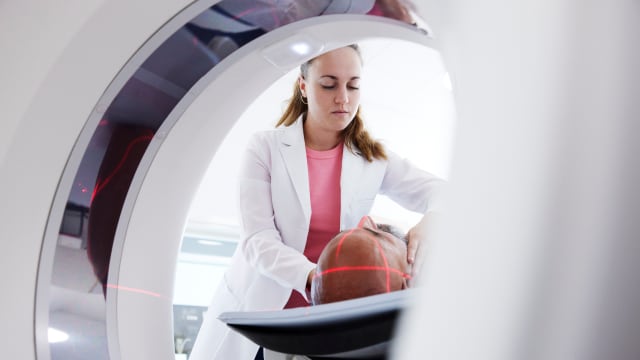
Philips Healthcare faced significant challenges with the maintenance of its advanced medical imaging systems, like MRI and CT scanners. These machines are essential for patient diagnosis and treatment, requiring high availability to ensure optimal clinical performance and predictable costs. However, unplanned downtime due to maintenance issues not only disrupted healthcare services but also posed a financial burden on healthcare providers.
Mauro Barbieri, principal architect service at Philips Healthcare, explained, “Just one of our sophisticated MRI scanners will log a million events and deliver 200,000 sensor readings every day, based on tens of thousands of data elements. Due to the complexity and the highly regulated environment in which medical devices operate, they have a long development time. And although a wealth of data is captured, this was not designed to support predictive maintenance, as who knew 20-30 years ago that IoT would be a thing and that we would use artificial intelligence to predict failures? To change our approach, we needed to integrate many data sources and create predictive models.”
Recognizing the need for a more reliable and efficient service model, Philips Healthcare set out to shift from a reactive to a proactive maintenance approach. This transition required the integration of vast amounts of sensor data from medical devices, advanced analytics, and machine learning models to predict and prevent potential failures before they could impact service availability. The challenge was not only technical but also operational, as it involved rethinking existing processes and ensuring that predictive maintenance could be seamlessly incorporated into clinical workflows without disrupting patient care.

Our OpenText Analytics Database-powered predictive maintenance system, built on vast amounts of data and advanced AI models, allows us to detect and address potential issues before they impact clinical operations. This improves the reliability of our equipment and enhances patient outcomes and satisfaction.
Solution
Philips Healthcare leveraged OpenText™ Analytics Database to develop a predictive maintenance system that uses AI-driven analytics to minimize equipment downtime, ensuring high availability and uninterrupted patient care.
Products deployed
-
OpenText™ Analytics Database (Vertica)
Analyze petabytes of data in no time with an AI-driven analytics database
Implementing predictive maintenance platform using AI and machine learning
Leveraging OpenText Analytics Database, Philips Healthcare implemented a sophisticated predictive maintenance platform that leverages advanced AI and machine learning algorithms. The AI-driven platform analyzes vast amounts of data collected from various medical devices to predict potential system failures before they occur. By utilizing AI, Philips Healthcare can process complex datasets efficiently and identify patterns that indicate imminent issues, allowing them to take preventive action well in advance.
Barbieri explained, “By leveraging predictive analytics, we can reduce unplanned downtime significantly, ensuring that our critical medical imaging systems remain available for patient care. This proactive approach is essential in delivering reliable and efficient healthcare services.”
Leveraging proactive issue detection with sensor data integration
Philips Healthcare integrated data from over 200 different sources, including real-time logs, error reports, and performance metrics from its medical devices. This amounted to six trillion rows of data, including 10 years of valuable historical data. This is centralized in a comprehensive data warehouse, where one and a half petabytes of information are continuously monitored and updated. The predictive models use this data to detect anomalies and potential issues early, ensuring that any signs of failure are addressed proactively, reducing the likelihood of equipment downtime.
Barbieri commented, “Our devices generate massive amounts of data daily. By centralizing and analyzing this data with OpenText Analytics Database, we can detect even the smallest anomalies, allowing us to intervene before a minor issue becomes a major problem.”
Designing non-intrusive and proactive service actions
Patient care is the absolute priority, so to minimize disruptions to clinical workflows, Philips Healthcare has modelled multiple failure modes for key components of MRI scanners and CT machines. It has designed its service actions to be non-intrusive and scheduled proactively. The predictive maintenance platform generates alerts based on the data analysis, which are then reviewed by a remote monitoring team. These alerts guide maintenance activity scheduling to times that are least disruptive to clinical operations, ensuring that the equipment remains operational and available when needed most.
After initial implementation, the OpenText Analytics Database platform grew in popularity within the company and soon scaled globally to cover many countries. Its built-in flexibility allowed for the necessary regional compliance adaptations. For instance, China runs a separate version to ensure that customers’ data stays within its national borders.

Our devices generate massive amounts of data daily. By centralizing and analyzing this data with OpenText Analytics Database, we can detect even the smallest anomalies, allowing us to intervene before a minor issue becomes a major problem.
Results
Philips Healthcare deployed OpenText Analytics Database in just eight months. The organization achieved a 30 percent reduction in equipment downtime, enhanced service efficiency, and improved overall patient care outcomes.
Achieved 30% downtime reduction and improved patient care
Millions of medical system log files are processed daily by OpenText Analytics Database. This directly supports Philips Healthcare’s predictive maintenance and has led to a 30 percent reduction in equipment downtime. This improvement ensures that critical medical imaging systems are more reliably available for patient care, reducing delays in diagnosis and treatment.
Barbieri commented: "Our OpenText Analytics Database-powered predictive maintenance system, built on vast amounts of data and advanced AI models, allows us to detect and address potential issues before they impact clinical operations. This improves the reliability of our equipment and enhances patient outcomes and satisfaction."
Enabled an 84% first-time fix rate, boosting device uptime
The new OpenText Analytics Database-driven system has led to 50 percent of CT service cases being diagnosed and resolved entirely remotely. For the remaining cases where an on-site visit is required, the system enabled an 84 percent first-time fix rate for equipment issues, meaning that most problems are resolved on the first service visit. In a typical hospital setting, this amounts to 136 hours of extra operational device availability per year. This efficiency reduces operational costs and minimizes disruptions to clinical workflows, directly and positively impacting Philips Healthcare’s customers and their patients.
Peter Sharpe, chief executive at Cobalt Imaging, one of Philips Healthcare’s customers, explained, "Remote service provides us with an engineer online all the time. They tell us when we’ve got a fault before we know we’ve got a fault. And not only that, but they can also fix the fault before we knew we had a fault. And that’s impressive."
Introduced proactive issue detection and full observability
With over 20 percent of issues being detected proactively before customers notice them, Philips Healthcare has enhanced its service reliability and customer satisfaction. Full data observability ensures precise monitoring, resulting in more accurate maintenance actions; essential when managing medical equipment. The proactive approach prevents potential disruptions and ensures that equipment is maintained without impacting patient care.
"Thanks to the predictive maintenance system, we’ve significantly reduced downtime, ensuring that our imaging systems are always ready to support patient care. We have more uptime on the scanner and are potentially able to see more patients, boosting our service satisfaction," attested David McCafferty, superintendent radiographer at New Stobhill Hospital in Glasgow.
Barbieri concluded, “We are in the business of improving people’s health and wellbeing through meaningful innovation. Preventing unplanned downtime for crucial medical devices means more patients can benefit faster. Leveraging OpenText Analytics Database, we achieve this with 24/7 proactive monitoring to ensure that all the components in our infrastructure are fully observable. We support hundreds of different data types, and our data quality is continuously improving which in turn enhances our service and our customers’ experience.”


