OpenText인 이유
OpenText인 이유
개요OpenText인 이유
OpenText는 수십 년간의 전문 지식을 통해 데이터를 활용하고, 사람과 프로세스를 연결하며, 신뢰할 수 있는 AI를 강화합니다
데이터 관리 및 연결
기업 전체의 데이터를 매끄럽게 통합하여 정보 단절을 없애고, 협업을 강화하며, 리스크를 최소화하세요
AI가 활용 가능한 정보
데이터를 AI가 활용 가능하고 구조화되고, 접근 가능한, 최적화된 정보로 변환하세요
내장 보안 및 규정 준수
규제 및 준수 요구 사항을 충족하고 정보의 수명 주기 전반에 걸쳐 보호하세요
직원 역량 강화
개요직원 역량 강화
OpenText는 사람들이 콘텐츠를 관리하고, 작업을 자동화하며, AI를 사용하고, 협업하여 생산성을 높일 수 있도록 지원합니다
고객
전 세계 수천 개의 기업이 OpenText의 혁신적인 솔루션으로 성공을 거두고 있는 방법을 확인해 보세요
직원
직원은 OpenText의 가장 큰 자산으로, OpenText 브랜드와 가치의 생명입니다.
기업의 사회적 책임
OpenText가 사회적 목표를 발전시키고 긍정적인 변화를 가속화하기 위해 어떤 노력을 하고 있는지 알아보세요
파트너
디지털 혁신을 이루기 최적인 솔루션과 전문성을 갖춘 OpenText 파트너를 만나보세요
AI 리더십
개요Aviator AI
새로운 방식으로 정보 보기
OpenText™ Aviator™
비즈니스, 데이터 및 목표를 파악하는 AI
OpenText™ Content Aviator™
AI 콘텐츠 관리 및 지능형 AI 콘텐츠 어시스턴트를 통해 효율적으로 작업하세요.
OpenText™ DevOps Aviator™
더 빠른 앱 제공, 개발 및 자동화된 소프트웨어 테스트를 만나보세요.
OpenText™ Experience Aviator™
고객 성공을 위해 고객 커뮤니케이션과 경험을 개선해 보세요.
OpenText™ Service Management Aviator™
사용자, 서비스 상담원 및 IT 직원이 필요한 답을 찾을 수 있도록 권한을 부여하세요.
OpenText™ Trading Grid™ Aviator™
공급망 전반에서 AI 기반 지식, 인사이트, 안내형 조치를 지금 바로 실현하세요
Aviator AI
개요Aviator AI
새로운 방식으로 정보 보기
OpenText™ Aviator™
비즈니스, 데이터 및 목표를 파악하는 AI
OpenText™ Content Aviator™
AI 콘텐츠 관리 및 지능형 AI 콘텐츠 어시스턴트를 통해 효율적으로 작업하세요.
OpenText™ DevOps Aviator™
더 빠른 앱 제공, 개발 및 자동화된 소프트웨어 테스트를 만나보세요.
OpenText™ Experience Aviator™
고객 성공을 위해 고객 커뮤니케이션과 경험을 개선해 보세요.
OpenText™ Service Management Aviator™
사용자, 서비스 상담원 및 IT 직원이 필요한 답을 찾을 수 있도록 권한을 부여하세요.
OpenText™ Trading Grid™ Aviator™
공급망 전반에서 AI 기반 지식, 인사이트, 안내형 조치를 지금 바로 실현하세요
비즈니스 네트워크
개요Business Network
한 번만 연결하면 안전한 B2B 통합 플랫폼으로 모든 대상과 연결할 수 있습니다.
콘텐츠
개요Content
AI가 활용 가능한 콘텐츠 관리 솔루션으로 지식 재구성
사이버 보안
개요Cybersecurity
기업 보호를 위한 통합 사이버 보안 솔루션
DevOps
개요DevOps
AI 기반 DevOps 자동화, 테스트 및 품질을 통해 더 나은 소프트웨어를 더 빠르게 제공
Experience and Fax
개요Experience and Fax
잊을 수 없는 고객 경험으로 대화 재창조
관측 가능성 및 서비스 관리
개요Observability and Service Management
IT 운영의 비용과 복잡성을 줄이기 위해 필요한 명확성 확보
API
개요APIs
Extend the value of your OpenText solutions by building integrations, automation and custom experiences
OpenText™ API Services
사용자 정의 애플리케이션 및 워크플로를 지원하는 실시간 정보 흐름을 제공하는 OpenText Cloud API를 사용하여 원하는 방식으로 구축
Device and Data Protection
개요Device and Data Protection
중요한 데이터를 보호하고 중요한 순간에 복구하기
신뢰할 수 있는 데이터 및 AI
개요신뢰할 수 있는 데이터 및 AI
안전한 정보 관리가 신뢰할 수 있는 AI를 만나다
OpenText™ Aviator™ Studio
데이터 언어로 에이전트를 구축, 배포 및 반복할 수 있는 공간
OpenText™ Discovery
AI를 강화하기 위해 데이터 수집 및 메타데이터 태그 지정 자동화를 지원하는 도구 세트
OpenText™ Data Compliance
거버넌스를 사전 예방적이고 지속 가능하게 만드는 서비스 및 API 제품군
OpenText™ Aviator™ AI Services
AI 여정을 도와주는 전문 서비스 전문가
인공 지능
개요Aviator AI
새로운 방식으로 정보 보기
OpenText™ Aviator™
비즈니스, 데이터 및 목표를 파악하는 AI
OpenText™ Content Aviator™
AI 콘텐츠 관리 및 지능형 AI 콘텐츠 어시스턴트를 통해 효율적으로 작업하세요.
OpenText™ DevOps Aviator™
더 빠른 앱 제공, 개발 및 자동화된 소프트웨어 테스트를 만나보세요.
OpenText™ Experience Aviator™
고객 성공을 위해 고객 커뮤니케이션과 경험을 개선해 보세요.
OpenText™ Service Management Aviator™
사용자, 서비스 상담원 및 IT 직원이 필요한 답을 찾을 수 있도록 권한을 부여하세요.
OpenText™ Trading Grid™ Aviator™
공급망 전반에서 AI 기반 지식, 인사이트, 안내형 조치를 지금 바로 실현하세요






클라우드 파트너
개요클라우드 파트너
OpenText는 주요 클라우드 인프라 제공업체와 협력하여 어디서나 OpenText 솔루션을 실행할 수 있는 유연성을 제공합니다
엔터프라이즈 애플리케이션 파트너
개요엔터프라이즈 애플리케이션 파트너
OpenText는 최고의 엔터프라이즈 앱 제공업체와 협력하여 비정형 데이터를 활용함으로써 더 나은 비즈니스 인사이트를 제공합니다
 Citizens Energy Group
Saves time and effort, and keeps technical staff focused on strategic objectives by enabling business users to test mission-critical software
About Citizens Energy Group
-
Population served:900,000
-
Founded:1887
Summary
Challenges
- Manually smoke testing new releases of critical applications took around 20 hours.
- Software testing was stealing time and focus from strategic projects.
Solution
- Working with OpenText and iLAB to deploy OpenText™ Functional Testing (UFT One).
- Automating and streamlining existing manual tests.
Results
 92.5% reduced time to execute testing
 Empowered business experts to accomplish tech goals
 75% reduced time required to create test scripts
Challenges
- Manually testing software was taking too long and stealing focus
- Software testing represented an inefficient use of budget and resources
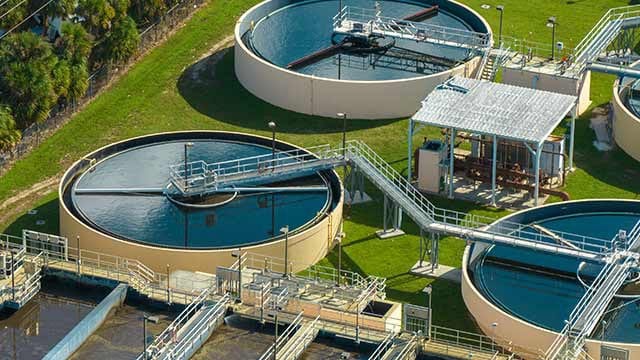
To minimize the risk of wasteful, costly, and potentially dangerous leaks of natural gas, Citizens rigorously inspects and monitors its extensive network of pipelines and valves. In addition to assuring the safe and reliable delivery of natural gas to customers, this work helps Citizens comply with the US Federal Government’s Pipeline Safety Improvement Act of 2002. The organization uses an Esri application called ArcGIS Field Maps to help its field operatives plan, manage, and report on their inspections. Field Maps is integrated with other geospatial apps in the Esri portfolio to help Citizens issue alerts and execute remediation activities in the event of a significant leak.
John Anderson, manager of IT PMO at Citizens Energy Group, said, “Public safety is paramount to Citizens, and Field Maps is a vital link in the chain, helping our field technicians plan their inspections efficiently and report back on any issues. As with any other software product, there are ongoing updates and fixes, and these need to be thoroughly tested to ensure that new releases work as expected right away. Within a broader initiative around automation, we wanted to streamline the testing process for Field Maps.”
Joe McKamey, CSM - IT product owner GIS at Citizens Energy Group, added, “Testing software requires time, effort and skill. Manually smoke testing new releases of Field Maps took around 20 hours and stole time and focus from more strategically important projects. This was not an efficient use of our budget or resources.”
Through test automation, Citizens aimed to reduce the need for software engineers to get involved in routine testing, driving shorter cycle times and higher quality with less human effort.
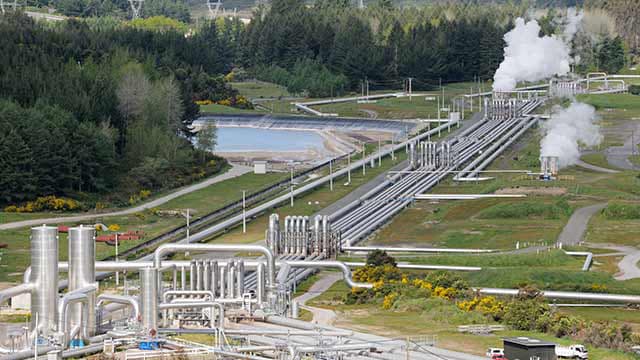
With OpenText Functional Testing, a person who understands the business process can develop effective test scripts even if they have no software-engineering skills whatsoever.
Solution
To help its software testers save time and effort, and to keep technical staff focused on strategic objectives, Citizens Energy chose OpenText Functional Testing One for the streamlining and automation of functional testing.
Product deployed:
-
OpenText™ Functional Testing
Accelerates and simplifies end-to-end functional testing by automating tests for enterprise apps using embedded AI-based capabilities
Choosing a new functional testing solution
Citizens engaged iLAB, a worldwide leader in software quality assurance, to help find a test automation solution for Field Maps. Kevin Copple, director, Technology and Support Services at iLAB, said, “We used Gartner’s Magic Quadrant to identify the leading contenders, and we studied 19 projects over the course of a month before shortlisting OpenText Functional Testing and one other product as the only two capable of meeting the functional requirements. When measured in terms of price, usability and flexibility, OpenText Functional Testing was the clear winner. A further advantage was the option to deploy on-prem: Citizens’ security requirements essentially ruled out a SaaS deployment.”
OpenText Functional Testing is an AI-powered functional testing tool that works across desktop, web, mobile, mainframe, composite, and packaged enterprise-grade applications. Following a rapid implementation, iLAB personnel started developing test scripts and transferring skills to business users at Citizens. “With OpenText Functional Testing, a person who understands the business process can develop effective test scripts even if they have no software-engineering skills whatsoever,” said Joe McKamey. “In other words, rather than taking an engineer away from another project and explaining the business process to them, the person who knows the product can build the scripts themselves. That makes for much shorter cycle times, so that field operatives can use the new software in production without delay.”
Streamlining and automating tests
Wherever possible, iLAB has broken down the existing manual tests into smaller, simpler test actions. The automation scripts then call multiple actions in sequence, assembling them into more complex frameworks. This atomized approach provides basic test building blocks that can be reassembled to meet any new requirement. It also makes test scripts far easier to maintain. Instead of laboriously making the same change to multiple scripts, Citizen can update a single action and have it automatically propagate to all scripts that call on that action.
iLAB is now working to transfer the use of OpenText Functional Testing to the internal team at Citizens; business users at Citizens will soon be largely autonomous in using the solution to manage testing for Field Maps.
OpenText Functional Testing has already delivered great benefits in speed and reusability, and has helped free up our engineers to focus their expertise on other projects.
Results
Through faster and more efficient functional testing with OpenText Functional Testing, Citizens Energy can focus its technical specialists on strategically important projects.
92.5% reduced time to execute testing
The introduction of OpenText Functional Testing significantly accelerated the testing of Field Maps. Manual testing that previously took 20 hours to complete is now automatically executed within just an hour and a half; a 92.5 percent reduction. What’s more, testing typically involves just a single person, versus multiple people before OpenText Functional Testing.
Empowered business experts to accomplish technology goals
“In addition to completing tests faster, we have empowered the business people who understand the application logic to handle tasks that previously required an engineer,” said John Anderson. “That’s much more efficient for the organization as a whole, and it means we can focus our internal talents on the most appropriate and beneficial activities.”
OpenText Functional Testing gives Citizens far greater flexibility in testing, because the organization is no longer dependent on engineers with specialist technical skills. Business users can rapidly develop scripts that work seamlessly across multiple platforms. And if a small issue emerges – perhaps a single action that fails in a 100-line test – the organization can call in a software engineer to resolve that specific action in a very targeted way. “With OpenText Functional Testing, you don’t just get AI and natural-language interpretation, you also have the option to use a traditional coded environment that would be more familiar to a software engineer,” said Kevin Copple.
The automation of testing will improve software quality over time by enabling more tests to be executed within the same timeframes, and by reducing the possibility of human error. OpenText Functional Testing automatically preserves a full audit trail with screenshots, reducing the compliance burden on human testers and increasing the scalability of the testing process.
75% reduced time required to create test scripts
Based on iLAB’s experience with OpenText Functional Testing, developing an AI-based, OCR-powered script takes on average about 25 percent of the time required to develop a traditional object-based script. And thanks to the atomized approach based on test actions, whenever something changes, Citizens will be able to find and update a handful of relevant base actions, rather than having to manually update potentially hundreds of complex test scripts. With OpenText Functional Testing, testing scripts are also naturally resilient to minor changes in the software being tested. For example, if the order of objects – such as fields on a web page – changes, the software is able to scan the page, find the displaced element, and continue without interruption.
iLAB took advantage of the Insight feature of OpenText Functional Testing to enable scripts to recognize application objects based on what they look like rather than based on properties that are part of their design. For an item such as a logo embedded in a background image, which may not be successfully identified as an ordinary image or as text, OpenText Functional Testing can identify and validate it as an InsightObject. “InsightObject is really useful because it gives us the flexibility to compare a screenshot with the targeted image to make sure that the application is representing what’s supposed to be on screen at that time,” said Joe McKamey.
On iLAB’s recommendation, Citizens invested in concurrent licenses for OpenText Functional Testing, so that it can share the software between different users and projects more easily. This gives the organization the option to use the OpenText solution across the rest of its Esri portfolio and other applications in the future, or for testing its back-end infrastructure. John Anderson concluded, “OpenText Functional Testing has already delivered great benefits in speed and reusability, and has helped free up our engineers to focus their expertise on other projects. The solution enables the people who understand the business side of things to accomplish what they need on the technology side. We’d like to extend these capabilities across the organization, so that we can maximize the speed and efficiency of software testing.”


